Hey, Meanderers. Some links here are affiliate links, meaning I earn a small commission if you use them, at no extra cost to you. I only recommend resources and brands I genuinely trust and would share with a friend. Your support helps keep this journey going—thank you for meandering with me!
The summer solstice falls on Sunday, June 21st, 2026, at 09:24 BST . It’s the longest day of the year, and one of the oldest marked moments in human history.
Before the Celts: The Stones Were Already Watching
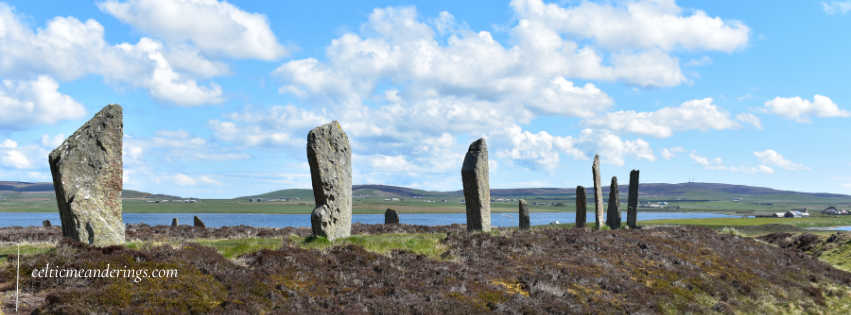
Long before the Celts spread across Europe, someone was already paying attention to the sun. The megalithic monuments are scattered across the British Isles and Brittany. The standing stones, the passage tombs, and the great stone circles were built by Neolithic peoples long before Celtic culture. And almost universally, they were oriented toward the sky.
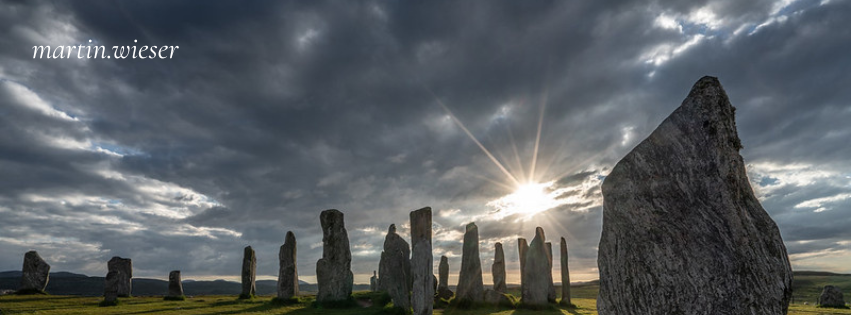
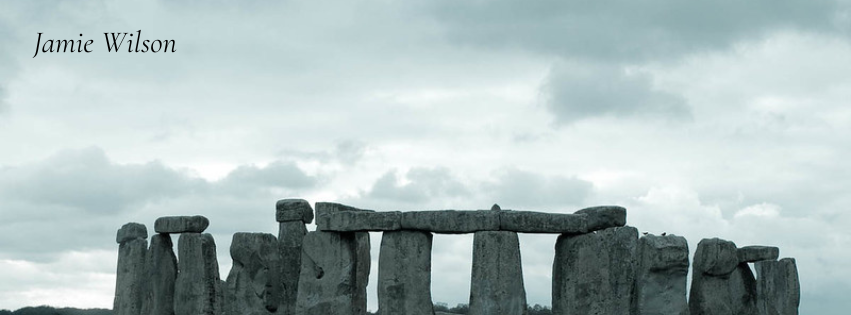
The most famous example is Stonehenge in Wiltshire, England, aligned to frame the midsummer sunrise precisely within the great trilithons. But it’s far from alone. The Callanish Stones on the Isle of Lewis in the Scottish Outer Hebrides track the movements of both sun and moon across the year.
Drombeg Stone Circle in County Cork, Ireland, aligns with the setting winter solstice sun. The Grange Stone Circle at Lough Gur in County Limerick. It’s the largest stone circle in Ireland, and is oriented to the summer solstice sunrise.
When the Celts arrived, they inherited this landscape. They didn’t build these sites, but there is strong evidence they used them. They gathered at these ancient thresholds to mark the turning of the year, weaving their own mythology into a sacred geography that had been accumulating meaning for millennia. When you stand at Callanish or Stonehenge at midsummer, you are standing inside a very long conversation between human beings and the light.
What the Celtic Summer Solstice Actually Meant
Here’s something worth understanding before we go further: for the ancient Celts, the summer solstice was not their primary midsummer festival. The four great fire festivals, Imbolc, Beltane, Lughnasadh, and Samhain, were the major turning points of the Celtic year. These were the cross-quarter days that fall between each solstice and equinox. The solstices and equinoxes were observed, but as solar events rather than the community-defining celebrations of the fire festivals.
The Liminal Threshold
Having said that, the summer solstice was far from ignored. For Celtic peoples, it was a liminal threshold. It was a moment when the natural world felt charged, when the boundary between the everyday and the otherworldly grew thin. Not in the deep ancestor-communion way of Samhain, but in a wilder, more elemental sense: the world of nature spirits, of the fae, of the land itself felt present and alive. The goddess of the land was understood to be at the height of her power and fertility.
The practical observances were centered on fire and water. Bonfires were lit on hilltops across Ireland, Scotland, and Wales to honor the sun’s power and protect the coming harvest. People bathed in rivers, lakes, and morning dew. Ritual cleansing was believed to carry healing properties under the midsummer light.
Specific plants gathered on Midsummer’s Eve, such as St. John’s Wort, vervain, mugwort, and elder, were considered especially potent, their medicinal and protective qualities intensified by the longest light of the year.
The Christian Influence
When Christianity moved through the Celtic lands, it didn’t erase these traditions; it absorbed them. The Feast of St. John the Baptist falls on June 24th, just days after the solstice, and many of the bonfires, the herb gathering, and the communal celebrations continued under a new name. In Ireland, particularly, St. John’s Eve bonfire traditions survived into the twentieth century in many rural counties.
Nation by Nation: How Each Celtic Land Marked Midsummer
Scotland
In Scotland, midsummer bonfires burned on hilltops from the Lowlands to the Highlands. They often lit from a sacred flame and used to drive cattle through the smoke for protection and blessing. The Callanish Stones on Lewis hold a particular midsummer magic.
Under the long northern twilight of the Outer Hebrides, where summer nights never fully darken, the stones take on an otherworldly quality that no photograph fully captures. The solstice here is less a single moment than an extended softening of boundaries between day, night, land, and sky.
Ireland
Ireland has one of the richest midsummer traditions of all the Celtic nations, perhaps because its landscape is so saturated with sites that hold the memory. The Hill of Tara in County Meath was the ancient seat of the High Kings. It has drawn crowds to witness the solstice sunrise for millennia, gathering around bonfires in a place once considered the very entrance to the Otherworld.
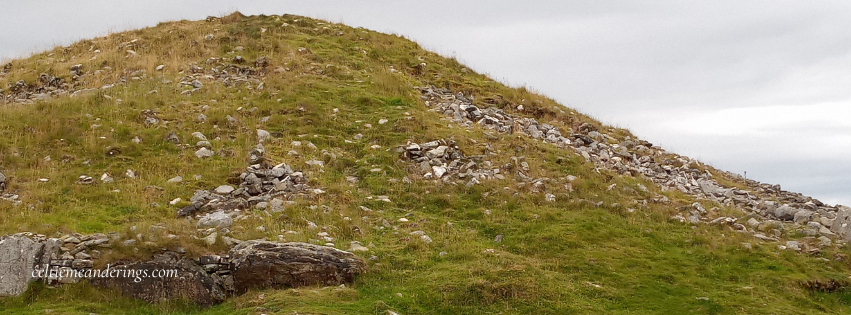
The Hill of Uisneach in County Westmeath, the mythological center of Ireland where the five ancient provinces converged, hosts its own annual solstice gathering. At Lough Gur in County Limerick, the Grange Stone Circle frames the midsummer sunrise in a moment that connects modern observers to a tradition stretching back five thousand years.
The Irish solstice also carries a distinct connection to the faerie world — the aos sí, the people of the mounds. Midsummer, like Beltane, was understood as a time when the membrane between the human world and the world of the sídhe (fairy mounds) grew permeable. This is different from the ancestor communion of Samhain; it is more elemental, more rooted in the living land. Offerings were left, careful courtesies extended, and the night treated with a respectful wariness.
Wales
In Wales, the summer solstice is called Alban Hefin — ‘the Light of Summer’ — in the Druidic tradition that has seen significant revival in modern Welsh spiritual life. The Gorsedd of Bards, the bardic order central to the Welsh Eisteddfod tradition, holds its midsummer ceremony oriented to the rising sun. The standing stones of Preseli in Pembrokeshire — whose bluestones were transported to Stonehenge itself — stand as a reminder that Wales was central to the very construction of Britain’s most iconic solstice site.
Isle of Man
The Isle of Man, sitting at the heart of the Irish Sea between Ireland, Scotland, Wales, and England, absorbed Celtic midsummer traditions from multiple directions. The island’s strong Manx Gaelic heritage kept alive bonfire traditions and seasonal observances well into the modern era. Midsummer on Mann has a liminal, in-between quality that fits an island perpetually poised between cultures and tides.
Cornwall
Cornwall’s midsummer tradition is perhaps its most publicly visible Celtic festival. The Golowan Festival, from the Cornish word for the eve of St. John, has been celebrated in Penzance for centuries, featuring the Mazey Day procession, bonfires, and community gatherings that draw on pre-Christian solstice observance. Cornwall maintains one of the most continuous midsummer bonfire traditions in any of the Celtic nations.
Celtic Summer Festivals Happening in 2026
If you’re planning to be in the Celtic nations this summer, or dreaming about it from afar, here are the festivals and gatherings worth knowing about:
Stonehenge Summer Solstice — England (June 20–21)
English Heritage opens Stonehenge for free public access on the evening of June 20th and the morning of June 21st. Crowds of druids, pagans, and curious visitors gather to watch the solstice sun align with the stones. Parking must be pre-booked, and public transport is strongly encouraged. This is one of the most attended events in Britain. If you’re going, plan ahead.
An Ghrian Ard – Festival of the Sun, Granard, Co. Longford, Ireland (June 20)
At the Knights & Conquests Heritage Centre in Granard, County Longford, this solstice celebration begins at 6 pm on June 20th with music, art, fire, and performances through the evening. Granard’s motte, a Norman earthwork built atop a much older site, gives the gathering a layered sense of history. A quieter, more intimate Irish solstice experience than the Hill of Tara crowds.
Summer Solstice on Uisneach, Co. Westmeath, Ireland (June 21)
The Hill of Uisneach is one of Ireland’s most mythologically significant sites — the navel of the country, where the god Lugh is said to have held the first great assembly. This gathering on June 21st invites visitors into a sacred landscape for solstice observance. If you can only choose one Irish solstice site, Uisneach rewards the effort.
Cork Midsummer Festival, Ireland (June 12–23)
The largest midsummer celebration in Ireland runs across twelve days of theatre, music, street spectacle, visual art, and dance through Cork city. The festival includes a special Radio Solstice described as ‘an ear to the otherworld’ — a distinctly Irish way of framing the season’s particular quality of attention.
Hebridean Celtic Festival (HebCelt) — Stornoway, Isle of Lewis, Scotland (July 15–18)
HebCelt is one of the finest Celtic music festivals in the world, held in Stornoway on the Isle of Lewis, just a short distance from the Callanish Stones. The combination of world-class Celtic music, Outer Hebrides landscape, and long northern summer evenings makes this an experience unlike any other. The 2026 festival runs July 15–18.
Llangollen International Musical Eisteddfod — Wales (July 8–13)
Wales’s great celebration of music and performance brings competitors and artists from across the world to the Dee Valley. The Eisteddfod tradition is rooted in bardic competition. It is one of the oldest continuous cultural institutions in any Celtic nation. The 2026 gathering runs July 8–13.
Festival Interceltique de Lorient — Brittany (July 31–August 9)
The crown jewel of the Celtic festival calendar. The 55th edition of the world’s largest Celtic cultural gathering takes place in Lorient, Brittany, with the theme ‘Cornwall, at the Heart of the Celtic Sea’ — spotlighting the deep connections between Cornwall and Brittany, two Celtic nations whose languages share common roots. Nearly 950,000 visitors over ten days, more than 300 events spanning music, dance, film, and gastronomy, and a Great Parade of Celtic Nations through the streets of Lorient. Announced artists for 2026 include Capercaillie, Agnès Obel, and Yann Tiersen. Ticketing opens July 1st.
Honoring the Solstice From Wherever You Are
You don’t need to be standing at Callanish or on the Hill of Tara to mark this threshold. The solstice is a solar event. It happens everywhere under the same sky, at the same moment. Here are some ways to bring the tradition into your own life:
Rise at dawn. Midsummer sunrise is the heart of the day. Even a cup of tea on the porch, facing east, in the quiet before the world starts, is a form of acknowledgment.
Light a candle or a fire. The bonfire tradition doesn’t require a hilltop. A candle on the table at sunset, lit with intention, carries the same thread.
Gather something from the land. The herb-gathering tradition is one of the oldest midsummer practices. St. John’s Wort blooms around the solstice across the Northern Hemisphere. Pick it, dry it, and place it somewhere intentional.
Find your nearest ancient site. You may be closer to a standing stone, a stone circle, or an earthwork than you think. The summer solstice is the best possible reason to visit.
Pull out the genealogy. The solstice is a good moment to think about the people who carried your line to you, who stood under midsummer light on the Isle of Man or in Fife or along the Breton coast. Their summer was this summer.
A Note on the Wheel of the Year
The summer solstice sits within a larger Celtic calendar, eight festivals marking the turning of the year from Samhain through the fire festivals and solar events back to Samhain again. Each has its own character, its own threshold quality, its own relationship to the land and the ancestors.
We’ll be exploring the full Wheel of the Year in a coming pillar post. For now, know that the solstice is not the peak of Celtic sacred time; it is a hinge point. It’s a breathing space between the fires of Beltane and the first harvest of Lughnasadh. The sun is at its height. The year begins its quiet turning back toward the dark.
That turning is worth marking.
Planning a visit to a Celtic solstice site? Get Your Guide offers guided tours to Stonehenge, the Callanish Stones, and many of the sites mentioned in this post. Use the links in the Celtic Meanderings resources pages to book and help support this site.
In search of old footprints, Sláinte!
If you enjoyed today’s journey, you can buy me a cuppa to support future pieces. Tapadh leibh.