
First Footing: The Celtic Threshold Tradition That Welcomes the New Year

The turning of the year has always been a liminal moment in the Celtic world. It is neither one thing nor another, but a narrow crossing between what has been and what is about to arrive. In Scotland, this moment is marked by a tradition known as First Footing, a custom rooted in hospitality, symbolism, and the quiet power of who crosses the threshold first.
For those of us drawn to ancestral travel, First Footing is more than a New Year’s custom. It is a living reminder that doors matter, footsteps matter, and the people who enter our homes carry meaning long after the fire has burned low.
What Is First Footing?
First Footing is a traditional Scottish New Year’s custom practiced during Hogmanay, the celebration that marks the arrival of the New Year. The “first foot” is the first person to cross the threshold of a home after midnight on December 31st.
According to tradition, the nature of the coming year was influenced by who that person was and what they brought with them.
This is not superstition in the shallow sense. It is a symbolic language. In a world shaped by long winters, fragile harvests, and close-knit communities, survival depended on food, warmth, and good relationships. First Footing encoded those values into ritual.
The Ideal First Footer
Traditionally, the most auspicious first footer was:
- A dark-haired man
- Bearing gifts
- Entering after midnight, never before
The preference for dark hair is often traced back to historical memory. During the Viking Age, fair-haired strangers arriving unannounced were rarely welcome news. Over time, the dark-haired visitor became associated with safety, continuity, and belonging.
While modern First Footing has softened these rules, symbolism remains.
Traditional First Footing Gifts and Their Meanings
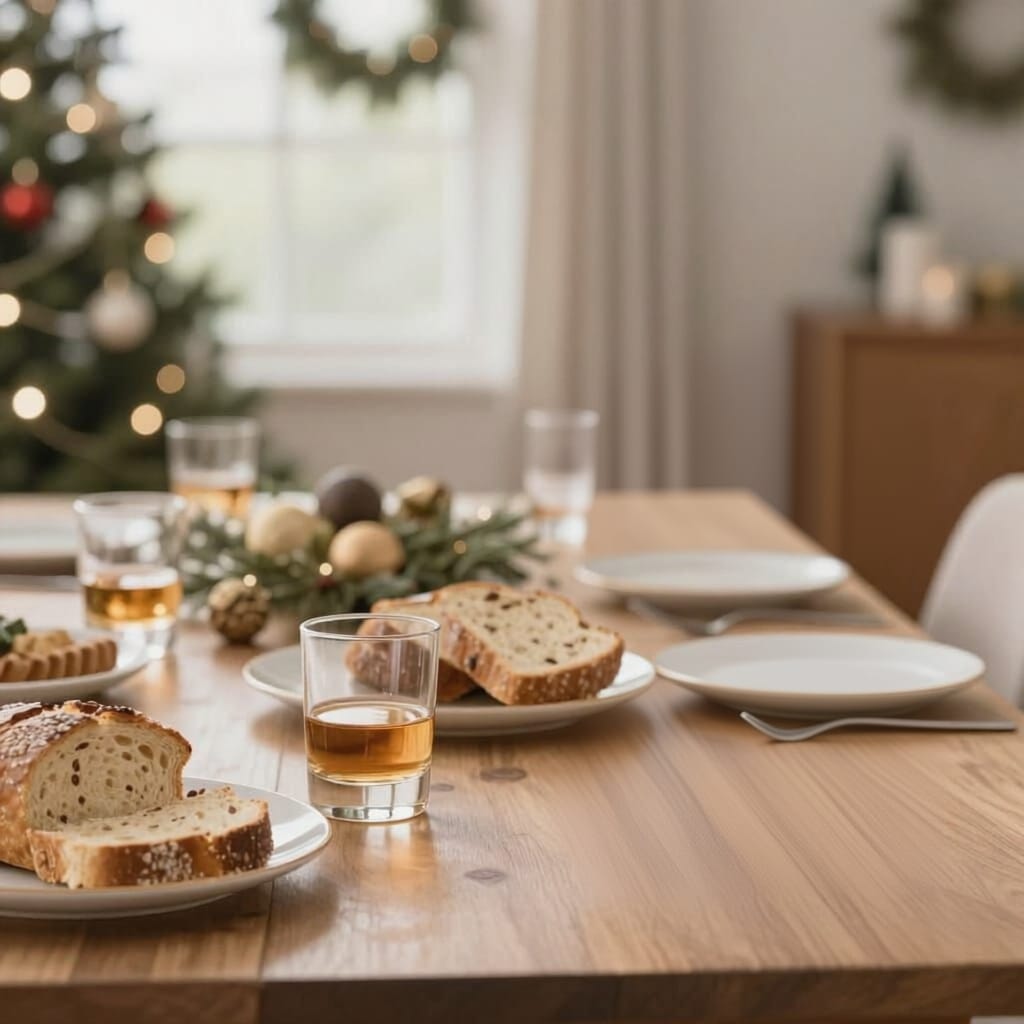
Each item carried by the first footer represented a wish for the household in the coming year:
- Coal: Warmth and protection through the winter
- Bread or shortbread: Food security and abundance
- Salt: Preservation, stability, and prosperity
- Whisky: Good cheer, hospitality, and friendship
- Black bun: A rich fruit cake encased in pastry, symbolizing plenty
These were not decorative objects. They were necessities. The gifts told a story of what mattered most to our ancestors when the year turned, and the nights were still long.
Hogmanay and the Celtic New Year
While January 1st is a modern calendar marker, the Celtic understanding of time has always been more fluid. In older traditions, the year turned at Samhain, when the veil thinned, and the dead walked close to the living.
Hogmanay has absorbed layers of older beliefs, Norse influence, and a Christian overlay. First Footing became the domestic expression of this transition, performed not in churches or on hillsides, but at the hearth.
Home became a sacred space.
Regional Variations Across Scotland
First Footing was never a single, rigid practice. It varied by region and community.
- In the Highlands, the ritual was often quieter and more family-focused.
- In Lowland towns, first footers might travel from house to house, welcomed with drink at each stop.
- In island communities, where survival depended heavily on cooperation, the symbolism of goodwill carried particular weight.
What remained consistent was the emphasis on relationships. The first person through the door was ideally someone known, trusted, and welcome.
First Footing and Ancestral Memory
For modern meanderers, First Footing offers a tangible way to step into ancestral experience.
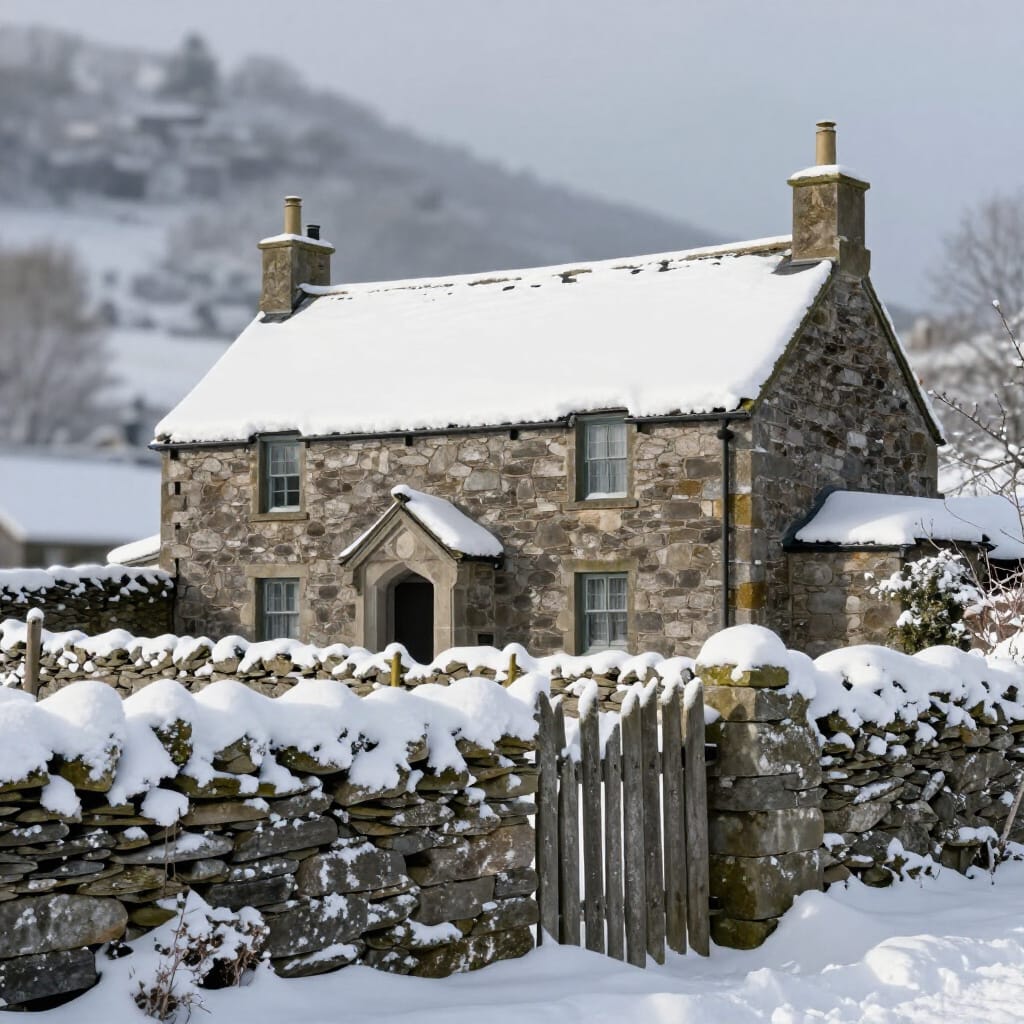
Imagine standing in a stone cottage in Aberdeenshire or a narrow close in Edinburgh’s Old Town. The door opens. Someone enters carrying coal, bread, and whisky. Laughter follows. The year begins not with fireworks, but with a human presence crossing a threshold.
This is how memory survives. Not in dates, but in gestures.
If your ancestors lived in Scotland, there is a strong chance they participated in this tradition, whether formally or informally. Even those who emigrated carried their spirit with them, shaping New Year customs in Canada, Appalachia, and beyond.
Practicing First Footing Today
First Footing is still practiced across Scotland and within the Scottish diaspora, though often in a modernized form.
Today, anyone may be the first footer. Gifts may be symbolic rather than practical. What matters is intention.
You can honor this tradition wherever you live by:
- Inviting a trusted friend or family member to be your first footer
- Choosing meaningful items that represent your hopes for the year
- Taking a moment to acknowledge those who crossed thresholds before you
For those engaged in ancestral travel, attending Hogmanay celebrations in Scotland offers a rare chance to see tradition woven into modern life, not staged for tourists but lived by communities.
Why First Footing Still Matters
In a world obsessed with speed and spectacle, First Footing reminds us that beginnings are quiet, deliberate things.
It teaches us that who enters our lives matters. That’s what we carry forward. The home is not just a place we inhabit, but a space we tend with care.
For genealogists and ancestral travelers, First Footing is an invitation. A reminder that the past is not gone. It is waiting at the door, ready to step inside if we know how to welcome it.
As the New Year arrives, may your threshold be crossed by warmth, sustenance, and good company. May the footsteps behind you be steady. May the path ahead be open. Happy New Year, Slàinte mhath!