Thin Places: Where the Celtic Veil Between Worlds Grows Thin
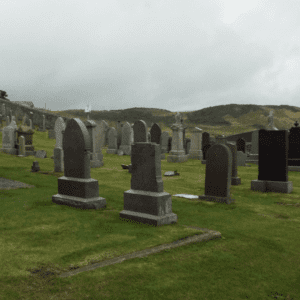
Some places feel different the moment you step into them. The air changes. Time slows. Something ancient and peaceful settles over you like a cloak. The Celts had a name for these places. Thin Places. They understood something about the world that modern culture has largely forgotten.
What Are Thin Places?
The ancient Celts believed the world we see is not the only world that exists. Alongside the physical landscape runs a spiritual one. It’s the realm of those who came before us. It’s a place of something older and deeper than human memory.
In most places, the distance between these two worlds is vast. But in certain sacred spots of ancient burial grounds, standing stones, holy wells, windswept hilltops, and moss-covered kirkyards, that distance narrows. The veil grows thin. And for a moment, if you are quiet enough and open enough, you can feel the presence of something beyond ordinary time.
These are Thin Places.
The concept comes from the Celtic Christian tradition, though its roots reach far deeper into pre-Christian Celtic spirituality. The phrase most often associated with it is attributed to the early Celtic church: “Heaven and earth are only three feet apart, but in Thin Places that distance is even smaller.”
For the ancestral travelers, Thin Places are not just spiritual curiosities. They are destinations.
How the Celts Viewed Death and Ancestors
To understand Thin Places, you have to understand how the ancient Celts viewed death. It’s nothing like the modern Western relationship with mortality.
For the Celts, death was not an ending. It was a transition. The soul continued, moving into another realm that existed alongside the living world rather than separated from it. Ancestors did not disappear; they remained present, accessible, even protective.
This is why the Celts built their most sacred structures around death and burial. The great passage tombs of Ireland, Newgrange, Knowth, and Dowth in the Boyne Valley, were not simply graves. They were architectural conversations between the living and the dead, oriented to capture the light of the winter solstice, built to honor the cycle of death and rebirth.
The ancestors were not gone. They were simply on the other side of a very thin wall.
This relationship with death extended into daily life. Ancestors were honored, consulted, and celebrated. The dead were not feared but respected as elders who had gone ahead. And the landscape itself was understood to be alive with their presence.
Samhain: When the Veil is Thinnest

Of all the points in the Celtic Wheel of the Year, none is more associated with Thin Places than Samhain. It’s celebrated on October 31st and into November 1st.
Samhain marked the end of the harvest season and the beginning of the dark half of the year. For the Celts, it was the most powerful and sacred time in the calendar. It was the moment when the veil between the living and the dead grew thinnest of all.
On Samhain, the ancestors could cross more easily into the living world. Fires were lit to guide them home. Places were set at tables for those who had passed. The boundary between what was seen and unseen dissolved just enough to feel the presence of those who came before.
Modern Halloween is a pale echo of this ancient practice. But for the Celtic ancestral traveler, Samhain remains a profound invitation to honor your people, visit sacred places, and feel the thinning of the veil.
Thin Places You Can Visit
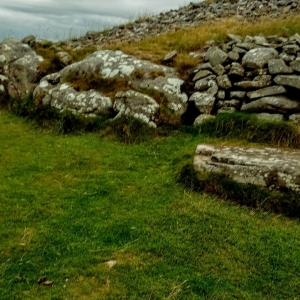
The Celtic nations are scattered with Thin Places, ancient sites where the veil has always been thin, and the ancestors feel close. Here are some of the most powerful:
Hill of Tara, County Meath, Ireland.
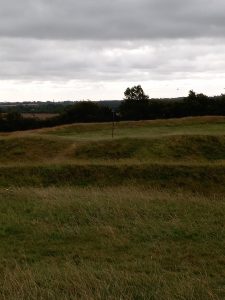
The sacred seat of the High Kings of Ireland, Tara sits at the heart of the Boyne Valley. It’s one of the most spiritually charged landscapes in the Celtic world. Surrounded by ancient earthworks, burial mounds, and standing stones, this hilltop has been a sacred site for over five thousand years. Standing here, you are standing at the center of Irish ancestral memory.
Newgrange and the Boyne Valley Burial Mounds, Ireland
Older than the Egyptian pyramids and Stonehenge. The passage tomb at Newgrange was built around 3200 BC. On the winter solstice, the rising sun penetrates the entrance. It floods the inner chamber with light. A deliberate architectural act connecting the living to the cycles of death and rebirth. The surrounding burial mounds of Knowth and Dowth are equally ancient and equally powerful.
Skara Brae, Orkney, Scotland
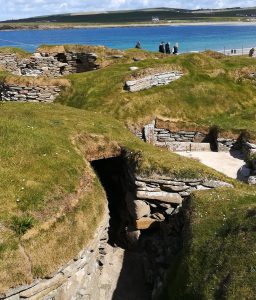
Hidden beneath the dunes of Orkney for thousands of years until a storm revealed it in 1850, Skara Brae is a Neolithic village dating to around 3100 BC, older than Stonehenge. Walking through these stone structures, you are walking through the homes of people who lived five thousand years ago. Few places on earth make ancient human life feel so immediate and so present.
St. Nicholas Kirkyard, Aberdeen, Scotland
In the heart of Aberdeen lies one of Scotland’s oldest kirkyards, surrounding the medieval church of St. Nicholas. For the ancestral traveler with Scottish roots, kirkyards like this one are among the most powerful Thin Places of all, not because of their age alone, but because of who lies within them. Your people may be here. Your story may have begun on this ground.
Ancient Stone Circles and Standing Stones
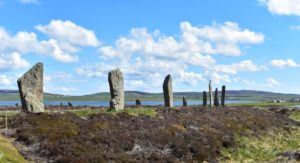
Scattered across Scotland, Ireland, Wales, Cornwall, and the Isle of Man, the standing stones and stone circles of the Celtic nations are among the oldest Thin Places of all. Their builders are long gone, but their intention remains: to mark something sacred, to hold the memory of a people in stone.
Finding Your Own Thin Places
Not every Thin Place is famous or ancient. Sometimes the thinnest place you will ever stand is a small country cemetery in rural Ireland, where the stone bearing your great-grandmother’s name has been worn smooth by centuries of rain.
Sometimes it is a kirkyard in Aberdeen where your emigrant ancestor was baptized four hundred years before they crossed an ocean and became part of your story.
The Celts understood that the sacred is not reserved for grand monuments. It lives wherever love was strong enough to leave a mark on the land.
As you meander through the Celtic nations, or even through the places your ancestors eventually called home, pay attention to where the air feels different, where time slows, where something ancient and peaceful settles over you.
That is your Thin Place. Your ancestors are there. Find them.
Have you visited a Thin Place that moved you? Share your experience in the comments. I’d love to hear where the veil grew thin for you.
May you walk gently between maps and margins. Slàinte mhath Laura