DNA: The Biological Compass
When the paper trail goes cold, your blood still remembers.
If you’ve spent some time doing family history, you probably know this feeling in your bones. You’re following the trail faithfully, and then little by little it begins to disappear. The records thin out. A surname shifts spelling. A census line is smudged beyond use. A town appears on a ship manifest under a name you cannot quite place. And there you are, staring at the place where the story seems to stop.
That is often the moment DNA starts to matter differently. Not because it can magically answer everything, and not because it replaces the careful work of documents, but because it can hand you a thread when the paper trail has gone quiet.
And if your people are from Ireland, Scotland, Wales, Cornwall, or the old Celtic edges of Britain, it helps to go in with a little clarity. The right test can save you time, money, and that particular kind of disappointment that comes from hoping a kit will answer a question it was never designed to answer.
What DNA Testing Actually Is (and Isn’t)
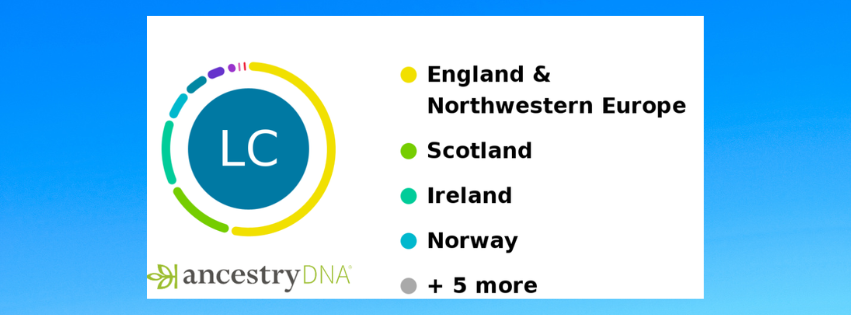
Mind you, I am no expert at DNA. At its simplest, a genealogy DNA test is just a comparison. Your results are set beside other people in a company’s database, and from that, you usually get the two things most of us are looking for: an ethnicity estimate and a list of genetic matches.
And that word estimate really matters. DNA can be wonderfully suggestive, but it is not a final pronouncement handed down from on high. It is part science, part probability, and part database strength. And that means your results are only as useful as the people and places that the company has enough data to compare you against.
And for Celtic research, that database question is a very big deal.
Hey, Meanderers. Some links here are affiliate links, meaning I earn a small commission if you use them, at no extra cost to you. I only recommend resources and brands I genuinely trust and would share with a friend. Your support helps keep this journey going—thank you for meandering with me!
The Three Types of DNA Tests for Ancestry
So, before you swab the inside of your cheek and drop a little tube in the mail, it helps to pause and ask: what am I really hoping this test will help me find?
1. Autosomal DNA — Finding Your Cousins (AncestryDNA & MyHeritage)
Autosomal DNA is where most people should begin, because it casts the widest net. It looks across all of your family lines and gives you the best chance of finding relatives within the last five or six generations.
For Celtic research, the biggest issue here is where your best matches are most likely to be.
- AncestryDNA is usually the best first stop because it has the largest consumer DNA database, with more than 25 million testers. If your ancestry is Scottish, Irish, or Welsh, that gives you the strongest odds of finding useful cousin matches and regional clues that connect back to the places you’re already researching.
- MyHeritage makes a strong second database, especially if your Celtic lines also connect to Europe or Scandinavia. It can be especially helpful for finding relatives that may not show up on AncestryDNA, particularly when your family story stretches beyond the British Isles.
Meanderer’s tip: If budget allows, test with AncestryDNA first, then upload your raw DNA file to MyHeritage for free. This gives you access to two databases for the price of one kit.
2. Y-DNA — Following the Paternal Line (FamilyTreeDNA)

Y-DNA is a narrower road, but sometimes it is exactly the road you need. It follows the direct paternal line from father to son, which makes it especially helpful when you’re trying to untangle a surname, test a clan connection, or make sense of one stubborn male line that has refused to yield to records alone.
FamilyTreeDNA (FTDNA) is the main consumer testing company for Y-DNA, and that makes it the go-to option when your question is really about one paternal line rather than your whole tree.
For Celtic ancestry, this matters in concrete ways:
- Y-DNA can help determine whether you carry markers associated with specific ancient Irish dynasties such as the Uí Néill, whose descendants include many O’Neill, O’Donnell, and Gallagher lines across Ireland and the diaspora.
- For Scottish researchers, Y-DNA has been used extensively in clan surname projects — Clan Donald, Clan Campbell, Clan Fraser, and dozens of others maintain active FTDNA projects where you can compare your results directly against known clan members.
- Welsh patronymic naming (where surnames like “Jones” mean “son of John”) makes Y-DNA particularly useful for breaking through Welsh brick walls, since the surname trail often runs cold within a few generations.
Important note: Y-DNA only tests the direct paternal line. If your Celtic ancestry flows through female lines (your mother’s father, or your father’s mother’s father), Y-DNA won’t capture it. That’s where autosomal and mtDNA tests fill the gaps.
3. LivingDNA — The Celtic Specialist
LivingDNA is the test that tends to catch the eye of Celtic researchers for a reason. It was built with the British Isles much more clearly in focus than many of the larger platforms, so if what you’re really longing for is a closer sense of place, this is often where the map begins to narrow.
Instead of stopping at a broad result like “Scotland,” LivingDNA may narrow to places like the Highlands, the islands, or other distinct regions. If you’ve already been following documentary clues into a particular place, that kind of detail can feel less like trivia and more like confirmation that you’re on the right path.
LivingDNA’s regional breakdown currently covers:
- Scotland (multiple sub-regions including Highlands, Lowlands, and island groups)
- Ireland (regional breakdowns across the provinces)
- Wales, Cornwall, and Devon (important for those tracing Cornish or Brythonic Celtic ancestry)
- England (by historical county groupings)
Meanderer’s tip: LivingDNA also accepts raw DNA uploads from AncestryDNA, 23andMe, and FTDNA, so you can access their British Isles regional breakdown without purchasing a new kit.
A Note on mtDNA — The Maternal Thread
mtDNA follows a different thread altogether: your direct maternal line, from mother to mother’s mother and back again. It is not usually the first test people need, but it can matter deeply if there is one maternal line in your tree that seems to keep slipping just out of reach.
FTDNA offers mtDNA testing as well, and for Celtic research, it can sometimes shed light on very old maternal origins tied to Britain and Ireland. This is usually the slower, deeper kind of research — less about quick cousin finds and more about long-view ancestry.
It’s slower research, more patience than revelation — but for meanderers drawn to the deep roots, it can be profoundly worthwhile.
Where to Start: A Practical Guide for Meanderers. If you want the simplest version of all this, here is the advice I’d give a friend over tea:
- If you want to find living cousins still in the Celtic nations, start with AncestryDNA, then upload your raw DNA to MyHeritage to widen the net.
- If you’re tracing a specific surname or clan line: Add a Y-DNA test through FamilyTreeDNA and join the surname or clan project that fits your line.
- If you want the most detailed regional breakdown for the British Isles: Upload your existing raw DNA to LivingDNA and use it for a more fine-grained look at the place.
- If you want to trace the deep maternal line: Consider the mtDNA Full Sequence test through FamilyTreeDNA, especially if that one-line matters to you most.
DNA is a Door, Not a Destination
A DNA result, however beautifully specific, is not the same as standing in the parish where your great-grandmother was baptized, or running your hand along a castle wall your ancestors once defended. It is a biological echo, and like all echoes, it points you somewhere rather than delivering you there.
What DNA testing does beautifully is give you new questions. A cousin match in County Antrim who shares your Doherty line. A haplogroup that places your paternal ancestors in Iron Age western Britain. A regional breakdown that says “Argyll and Bute” when you’ve been researching Campbell connections for years.
Those questions become invitations to write the email, to plan the trip, to stand in the churchyard, to walk the coastline, to notice the strange little pull of recognition in a place you’ve never been and yet somehow do not feel entirely new to. That may be the most moving part of this work: the sense that sometimes the body remembers what the records forgot.
Follow the compass. See where it leads.
Resources for Celtic DNA Research
- AncestryDNA — ancestry.com/dna
- MyHeritage DNA — myheritage.com/dna
- FamilyTreeDNA — familytreedna.com (Y-DNA and mtDNA)
- LivingDNA — livingdna.com (upload raw DNA for British Isles breakdown)
- GEDmatch — gedmatch.com (free tool to compare DNA across platforms)
- FTDNA Clan and Surname Projects — search at familytreedna.com/public